Is It Me or Is It the System? Untangling Self-Blame at Work
You’re halfway through replying to emails when the notification appears.
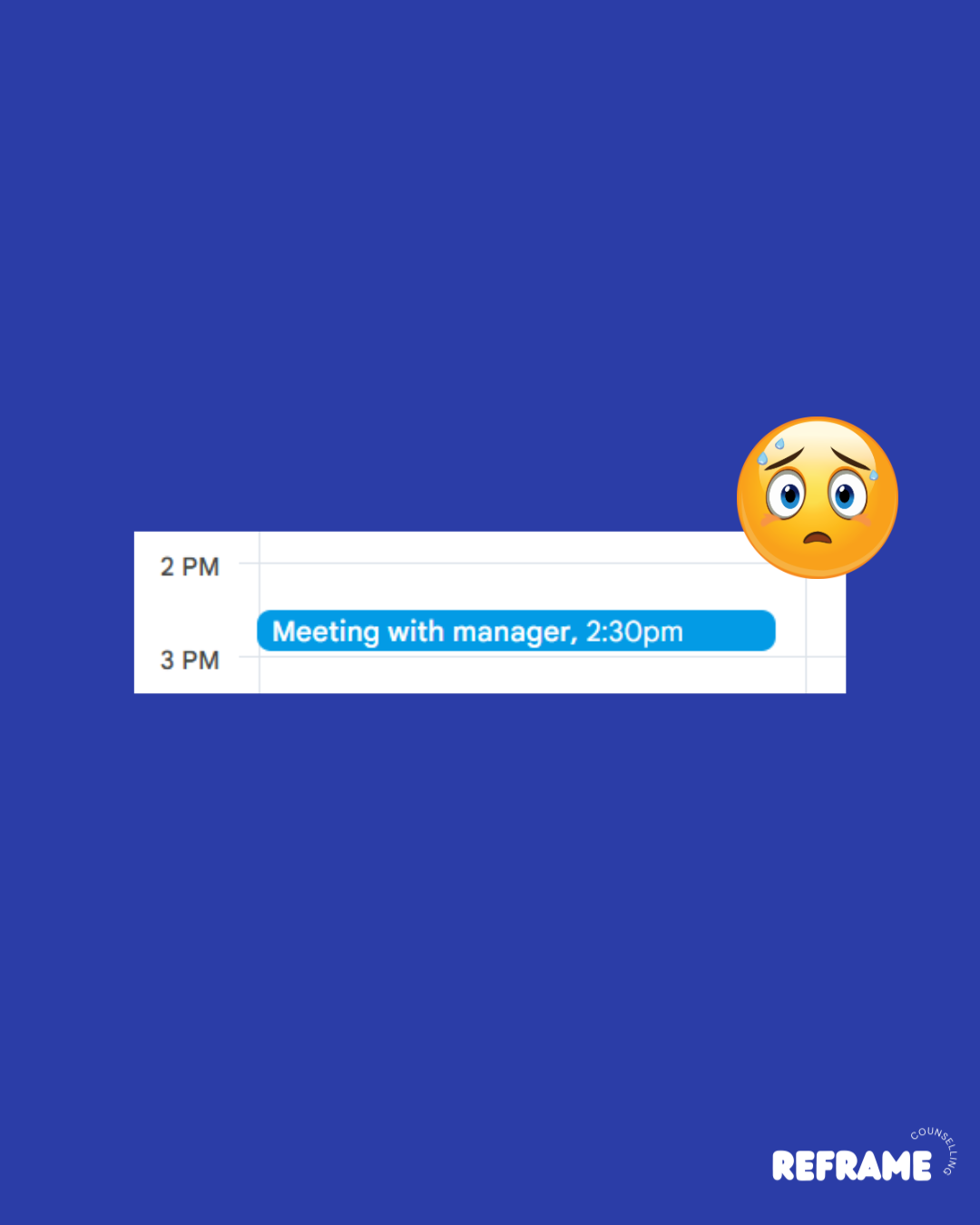
“Meeting with manager - 2:30pm.”
That’s it.
No context.
No agenda.
Just a calendar invite sitting in the middle of your afternoon.
Your body reacts before your mind does.
Your stomach tightens. Your chest feels heavy. You immediately begin replaying the last few days trying to identify what you might have done wrong. You think about that email you sent yesterday and wonder if your tone sounded rude. You remember a moment in a meeting where someone went quiet after you spoke and suddenly that feels important. You check messages looking for evidence that something has shifted.
You try to continue working but your focus is gone now. Part of your brain has already started preparing for danger.
Maybe you missed something.
Maybe you sounded too direct.
Maybe you asked too many questions.
Maybe they regret hiring you.
For sure this is the beginning of losing everything you worked so hard to build.
By the time the meeting actually happens, your body has spent hours carrying stress for something that never existed in the first place.
The first thing your manager says is:
“I just wanted to check in and see how you’re going.”
And rather than relief another thought drops in:
Why am I like this? Why does this feel harder for me than everyone else?
This is the moment many migrant professionals turn against themselves.
“I need thicker skin.”
“I should be more confident.”
“I need to stop overthinking.”
“Everyone else seems relaxed.”
But self-blame is often what happens when a person has spent a long time adapting to environments that required them to constantly prove their worth.
Not only are you a migrant professional, you are a professional at navigating systems, change, and uncertainty. You’ve just not recognised or taken credit for the amount of adaptation you’ve had to do.
You have already learned how to survive unfamiliar systems, unspoken rules, cultural differences, changing expectations, and environments where you are constantly aware that you are “new” in some way. That kind of adjustment does not just happen intellectually. Your nervous system learns too.
You begin over-preparing because mistakes feel dangerous.
You apologise constantly to soften your presence.
You rehearse conversations afterwards trying to work out if you sounded “wrong.”
You stay silent in meetings even when you have something valuable to say.
You monitor your tone carefully.
You become hyper-aware of how others react to you.
You become exhausted after interactions that look small from the outside because internally you were managing dozens of invisible calculations the entire time.
Over time the body changes too.
Some people slowly become smaller.
Their shoulders round forward.
Their voice becomes quieter.
They stop taking up space naturally.
Others go in the opposite direction. They puff themselves up trying to sound more certain, more confident, more powerful than they actually feel inside. They speak louder. Push harder. Try to prove they deserve to be there.
Neither feels natural.
Both are exhausting.
And many workplace cultures reward this exhaustion without ever naming it.
“We’re like family here.” - A dysfunctional family at that.
One where banter is used to disguise humiliation.
Where bullying gets dismissed because “that’s just how they are.”
Where people are told to speak up more while being interrupted every time they try.
Where feedback is vague and relational instead of clear and direct.
Where fitting in quietly matters more than feeling psychologically safe.
Many workplaces benefit from people believing the problem is individual because individual problems stay private. Systemic problems thrive on silence.
This is where confidence gets misunderstood.
Confidence is not purely internal.
To feel confident standing on a bridge, the bridge itself has to feel capable of holding you.
If a bridge is unstable, cracked, or unsafe, your nervous system responding cautiously is not weakness. It is intelligence.
Some workplace environments genuinely do not feel emotionally safe to people already carrying the pressure of migration, cultural adjustment, financial pressure, racism, exclusion, or visa insecurity.
That matters.
And naming that is not avoiding responsibility.
There is a difference between accountability and self-blame.
Accountability is lighter.
It says:
“I misunderstood that.”
“I could approach that differently next time.”
“I made a mistake.”
Then it moves.
Self-blame is heavier.
It says:
“I am the mistake.”
“I don’t belong here.”
“There must be something wrong with me.”
One supports growth.
The other attacks identity.
Not everything you carry belongs to you.
Some things belong to the environment:
The unclear expectations.
The lack of cultural support.
The unspoken hierarchies.
The pressure to over-function.
The systems that reward silence, adaptability, and emotional suppression while calling it professionalism.
The goal is not to avoid growth.
The goal is to disentangle what is yours from what never was.
A useful place to begin is asking yourself:
What part of this is mine to grow?
What part belongs to the environment?
What am I carrying that was never meant to be carried alone?
Because agency does not mean tolerating harm.
It means understanding that your nervous system is responding to something real instead of automatically assuming you are broken.
And maybe that is where self-trust begins.
Not in becoming fearless.
Not in pretending the bridge feels safe when it doesn’t.
But in trusting yourself enough to recognise the difference between personal growth and survival.
Because you didn’t migrate to be sort of happy.
You migrated for a better life. Is it?